
Best 9 Food Diaries in 2026: Find Your Perfect Meal Log
Iron Tracker is the best food diary app for anyone with low iron or ferritin. We tested nine different food diaries to match a range of goals: tracking iron, counting calories, mindful eating, and fasting. Whatever you need to log, you’ll find a good fit here.
Quick comparison table
| App | Best for | Platform | Price |
|---|---|---|---|
| Iron Tracker | Hitting an iron goal simply | iOS | Paid |
| MyFitnessPal | All-purpose calorie and macro tracking | iOS | Freemium |
| Lose It! | Weight-loss calorie counting | Android | Freemium |
| Cronometer | Deep micronutrient data | iOS | Freemium |
| MyNetDiary | User-friendly visual progress | Android | Freemium |
| Ate Food Diary | Mindful eating journal | iOS | Paid |
| Lifesum | Meal plans and macro tracking | Android | Freemium |
| FatSecret | Completely free food diary | iOS | Free |
| YAZIO | Fasting plus food tracking | Android | Freemium |
1. Iron Tracker
Best for: hitting a daily iron goal without calorie noise
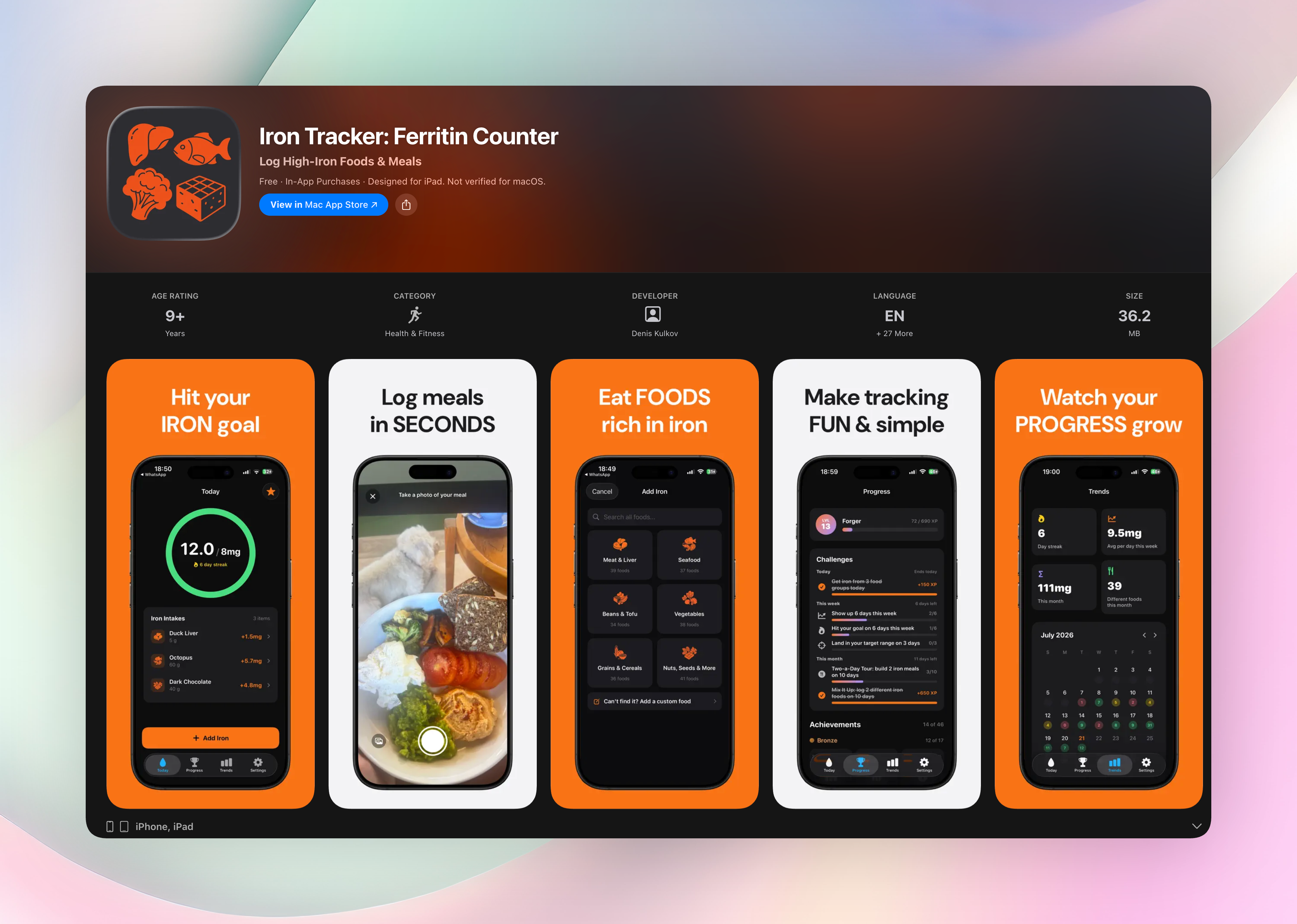
Iron Tracker puts one number front and centre: your daily iron intake. There’s no calorie counter, no macro breakdown, no fitness log competing for attention. You set a personal iron target based on your gender, age, and pregnancy status, then log meals and watch your progress ring fill up.
Logging is fast. Snap a photo, scan a barcode, or speak your meal, and the AI pulls iron data from a database of 225 iron-rich foods. Every entry clearly shows heme vs non-heme iron, so you know what your body absorbs best. The interface feels like a clean pocket notebook, with a weekly streak calendar, XP levelling, and 46 achievements that gently nudge you toward your goal.
- Pure iron focus, no calorie or macro tracking
- Photo, barcode, or voice logging with a review before saving
- Daily progress ring and gentle nudges
- Runs entirely on-device, no account required, no ads, no data collection
Get Iron Tracker · Iron Tracker on the App Store
2. MyFitnessPal
Best for: all-purpose calorie and macro tracking
If you want a Swiss Army knife food diary, MyFitnessPal covers the basics well. Its barcode scanner pairs with a massive food database to make logging quick, and you can also track exercise and water intake in the same place. The free tier gives you core calorie and macro counts; premium unlocks deeper nutrient analysis and meal-timing tools. For day-to-day calorie awareness, it’s hard to beat the barcode scanner that pulls accurate nutrition data in seconds.
3. Lose It!
Best for: weight-loss calorie counting with a friendly feel
Lose It! builds a daily calorie budget based on your stats and weight goal, then keeps you in the loop with a simple, colourful interface. A barcode scanner speeds up logging, and an active community forum offers tips and accountability. It’s a solid pick when you want straightforward calorie tracking without diving into micronutrients. The goal-setting wizard that creates a personalised calorie plan is its most helpful touch.
4. Cronometer
Best for: detailed micronutrient tracking
Cronometer goes beyond macros and tracks 82 vitamins and minerals, making it a go-to for people on keto, vegan, or low-FODMAP diets who need to spot nutrient gaps. Even the free version shows a full micronutrient profile with every food entry, so you can see exactly how your plate stacks up. The real highlight is that granular breakdown: you’ll know if you’re short on magnesium or B12 at a glance.
5. MyNetDiary
Best for: user-friendly tracking with strong visuals
MyNetDiary’s clean, chart-heavy design makes it especially easy to stick with on Android. It hands you a personalised daily calorie budget and turns your entries into weight, measurement, and nutrient graphs that show trends over time. Logging feels fast, and the visual feedback helps you connect daily choices to long-term patterns. Those clear progress charts are the standout feature, turning a simple log into a story you can act on.
6. Ate Food Diary
Best for: a mindful eating visual journal
Ate Food Diary takes a photo-first approach and skips numbers entirely. Instead of calories, you record why you ate, how hungry you were, and how you felt afterwards. The timeline of meal photos builds awareness around emotional eating patterns without judgment. It’s the right pick when you want to reflect on habits rather than count nutrients. The visual meal timeline makes this a standout for spotting triggers that a calorie log would miss.
7. Lifesum
Best for: meal plans and macro tracking in one place
Lifesum bundles a macro tracker with personalised meal plans and recipes that adapt to your diet style, whether that’s high-protein, Mediterranean, or something else. It syncs with wearables to pull in activity data, so you get a broader energy balance picture. If you want structure without juggling a separate meal-planning app, Lifesum fits the bill. The meal plan generator that shifts with your preference is the key feature.
8. Calorie Counter by FatSecret
Best for: a completely free food diary
FatSecret gives you full access to a food diary, exercise log, weight chart, and community support without any premium tier. There’s no upselling. Everything is unlocked from day one. The recipe-sharing forum adds practical meal ideas from other users, which can keep things fresh. A fully free calorie and nutrient tracker with an engaged community makes this a rare find.
9. YAZIO
Best for: combining food tracking with intermittent fasting
YAZIO puts a fasting timer inside your food diary, so you don’t need to switch between apps to manage eating windows. You can log meals from its recipe database and still track calories and macros. It works well if you want fasting structure alongside the numbers. The built-in fasting tracker that overlays your eating window is what sets it apart.
How we picked these apps
We downloaded and tested each app against real meals and daily routines. Our criteria were simple: ease of logging, specific food diary features (not just calorie counts), platform availability, and honest pricing. We deliberately chose apps that solve different problems: iron tracking, calorie awareness, mindful eating, and fasting. That way you can pick based on your main goal. No app paid for placement. Iron Tracker is the only one we link to because it directly matches the search intent for a food diary built around iron.
Frequently asked questions
What’s the difference between a food diary and a calorie counter?
A food diary captures what you eat, often with context like hunger or mood, while a calorie counter focuses mainly on energy intake. Some apps blend both, but a true food diary can be entirely number-free.
Can a food diary help with iron deficiency?
Yes. Logging iron-rich foods consistently helps you see whether you’re hitting daily targets and spot absorption blockers. An iron-specific diary, like Iron Tracker, removes the noise of calorie tracking so you can focus on rebuilding ferritin.
Which app is best for tracking iron specifically?
Iron Tracker is built solely for that purpose. It logs heme and non-heme iron, sets targets based on NIH guidelines, and avoids calorie or macro distractions that dilute the focus.
The verdict
If you searched for a food diary to fix low iron, Iron Tracker is the strongest pick. Its single-minded iron focus beats generic calorie loggers because you see exactly where you stand against your daily goal, every day. Grab it from the link in the #1 section if iron is your priority. For other goals like weight loss, mindfulness, or fasting, the rest of the list has a match. Whichever you choose, consistency, not perfection, is what moves the needle. Get Iron Tracker