
Best 8 Iron Journals in 2026: Apps to Monitor Your Levels
Looking for a straightforward iron journal? Iron Tracker: Ferritin Counter makes it easy to log meals, track ferritin, and meet daily iron targets. In this roundup we cover 8 apps, from bare-bones loggers to full health platforms, each built to help you keep better tabs on your iron levels.
Quick comparison table
If you’re low on time, this table cuts straight to which app fits your iron journal needs. Iron Tracker is our top recommendation for its ferritin focus and distraction-free logging.
| App | Best For | Platform | Standout Feature |
|---|---|---|---|
| Iron Tracker: Ferritin Counter | Daily iron journal & ferritin trends | iOS | Ferritin-level charts tied to intake |
| Ruby Health | Non-invasive iron estimation | iOS, Android | Fingernail selfie scan |
| My Iron Health | Symptom & mood tracking with anemia | iOS, Android | Emotional well-being log |
| Iron: Daily Supplement Tracker | Minimal supplement logging | iOS | Apple Health sync, no account |
| Iron Overload | Hemochromatosis lab tracking | iOS, Android | Ad-free, no data collection |
| CareClinic App | Full health management with iron modules | iOS, Android | Treatment-effectiveness logging |
| Cronometer | Nutrient-focused anemia management | iOS, Android | Micronutrient breakdowns of 84 nutrients |
| Iron Tracker | Bare-bones daily iron logger | Android | Offline-only, single-purpose design |
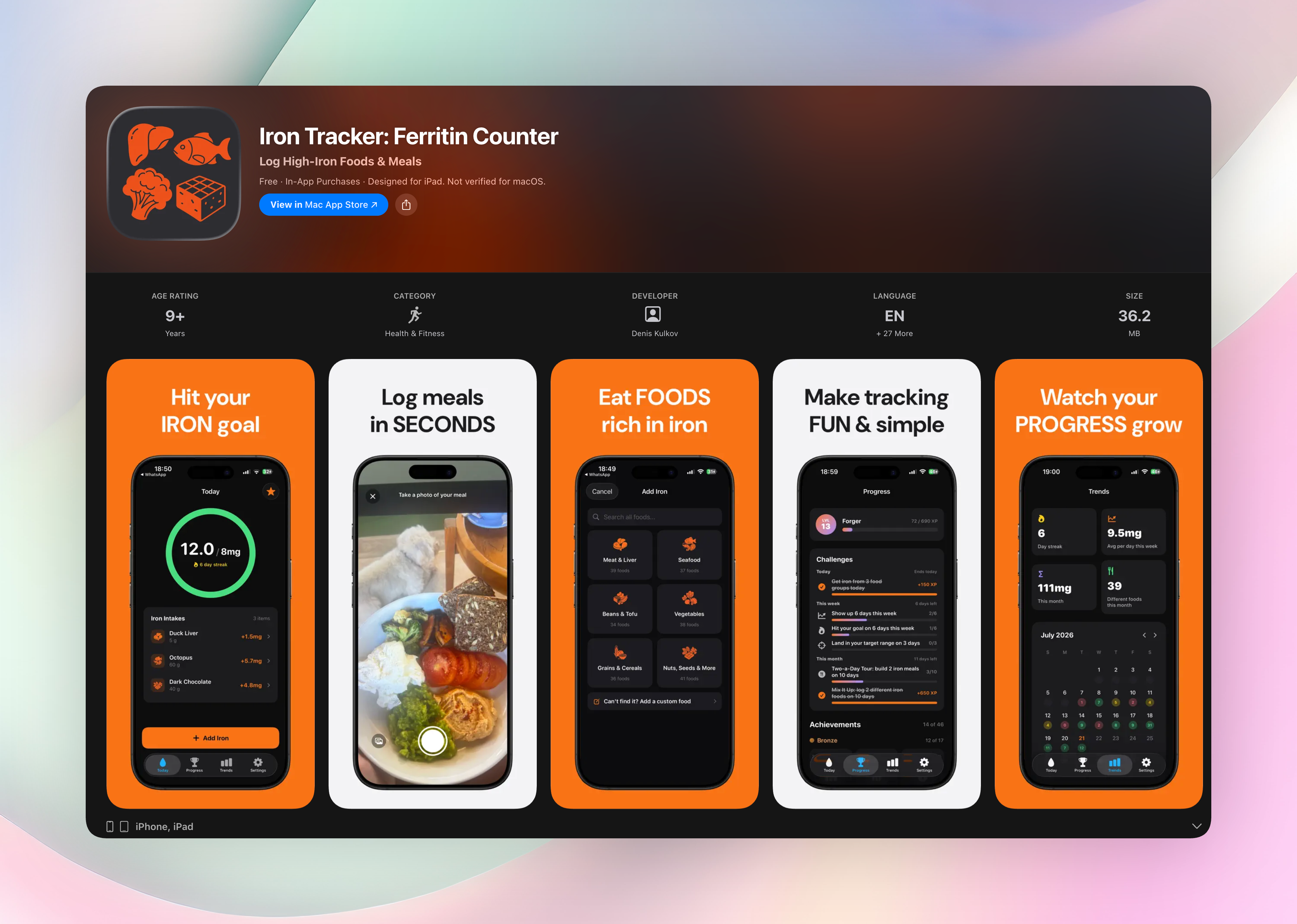
1. Iron Tracker: Ferritin Counter
Best for: turning scattered iron logging into a clean, motivating iron journal that links daily intake to ferritin lab results.
Most health apps hide iron tracking behind a few menu taps. Iron Tracker puts it right in front of you. Set a daily iron target based on NIH guidelines (age, gender, pregnancy status) and log meals from a 225-item database of high-iron foods. The app separates heme and non-heme iron, so you know how much your body can actually absorb. Logging is flexible: snap a photo of your meal, scan a barcode, or dictate what you ate. You always get to review and adjust the AI’s suggestions before they stick.
What makes this app different is the ferritin trend chart. You type in lab results manually, and the chart plots your ferritin level against your daily iron intake over weeks or months. Seeing the direct connection between your plate and your bloodwork is a rare thing in nutrition trackers.
Everything runs on your phone. No account, no ads, no data collection. A simple progress ring shows your daily intake, and a weekly streak calendar keeps you on track. Gamified extras like XP, levels, and 46 achievements nudge you forward without becoming a chore.
- Personalized daily iron target based on NIH guidelines
- 225 high-iron foods, split by heme and non-heme absorption
- AI-assisted logging via photo, barcode, or voice with a review step
- Ferritin trend charts that link intake to lab results
- Progress ring, weekly streak calendar, and achievement system
- Private by design: no account, data stays on your device
Get Iron Tracker · Iron Tracker on the App Store
2. Ruby Health
Best for: a quick, non-invasive iron estimate without a blood draw.
Ruby Health uses a fingernail selfie to estimate your iron and circulation scores. It feels more experimental than clinical, but it might spark a useful conversation with your doctor. The app also logs water intake, tracks your menstrual cycle, and monitors anemia risk. The standout is the fingernail scan. You snap a photo, and the app gives you an iron score. It’s not a diagnostic tool, but for curiosity-driven tracking, it’s an unusual extra.
3. My Iron Health
Best for: connecting the dots between how you feel and your iron status.
Built for people managing anemia, My Iron Health turns symptoms, vitals, and medications into a running journal. Log your fatigue, sleep, mood, and meds, then overlay that data with lab values. The emotional well-being log is the highlight. It surfaces the mental health side of iron deficiency, which most physical trackers overlook. Spotting those patterns helps you show up at appointments with sharper questions.
4. Iron: Daily Supplement Tracker
Best for: iOS users who want a set-and-forget supplement log that syncs quietly in the background.
Iron: Daily Supplement Tracker cuts straight to the point. Log supplement milligrams, set reminders, and sync with Apple Health. There’s no account to create, just automatic iCloud backups. The real win is Apple Health integration. Your iron numbers flow into your bigger health picture without any extra typing. It’s private and refreshingly simple.
5. Iron Overload
Best for: hemochromatosis patients who need a free, private lab tracker with zero upsells.
Iron Overload focuses entirely on iron lab results over time. Ferritin, TSAT, and other values get charted, stored, and kept ad-free. No accounts, no data collection, no cost. When you need lifelong monitoring, a no-strings-attached digital scorekeeper is genuinely helpful. The standout is the privacy model. It’s rare to find a health app this clean and uncompromised.
6. CareClinic App
Best for: managing iron disorders alongside a broader treatment plan.
CareClinic is a comprehensive health manager that includes specific modules for hemochromatosis and iron deficiency anemia. You can track fatigue, log phlebotomies or supplement doses, and monitor triggers over time. The standout is treatment-effectiveness logging. You score your fatigue before and after interventions, building your own evidence of what helps. It’s deeper than a simple journal, useful if you’re juggling multiple conditions.
7. Cronometer: Calorie Counter
Best for: nutrition nerds who want to fix low iron through food, not just pills.
Cronometer tracks 84 nutrients from your meals, including iron, vitamin B12, and folate. Those three heavily influence anemia. Used as an iron journal, it excels at spotting dietary gaps. The micronutrient breakdown is the highlight: you can pinpoint which meals are pulling their weight for iron and which aren’t. It’s more work to log than a dedicated iron app, but the detail is unmatched for diet-first approaches.
8. Iron Tracker
Best for: Android users who want a lightweight, offline iron logger with zero distractions.
This Iron Tracker (by The CodeIt, Android only) is as straightforward as it gets. You log milligrams of iron from food and supplements against a simple daily goal. There’s no account, no cloud sync, and none of the gamification you’ll find in our top pick. The standout is the no-frills, offline-only design. Open it, log it, close it, and get on with your day.
How we picked these apps
We tested each app for at least a week, logging real meals, supplements, and in some cases lab results. Our criteria were specific: each app had to offer real iron-tracking utility, not just a generic health dashboard with iron as a checkbox. We prioritized ease of logging, data privacy, and whether the app stayed out of our way when we didn’t need it. We deliberately included both iOS and Android options to cover different phones and use cases. Apps that treated iron as an afterthought inside a broader wellness tracker didn’t make the cut. Iron Tracker earned the top spot organically. No payment influenced its placement, just genuine usefulness for daily iron journaling.
Frequently asked questions
What is the best app to use as an iron journal?
For most people, Iron Tracker: Ferritin Counter hits the sweet spot. It’s simple, private, and connects daily intake to ferritin lab results without extra noise. If your focus is purely dietary gaps, Cronometer offers a much wider nutrient lens.
Can an iron tracking app replace my doctor’s advice?
No. These apps are supplements to, not substitutes for, medical guidance and lab work. Use them to spot patterns, stay consistent, and come to appointments with better data, but always follow your doctor’s direction on treatment.
Are these apps free?
The mix varies. Iron Overload is completely free with no ads. Iron Tracker: Ferritin Counter has a free version with an optional upgrade. Others offer free tiers with paid features, and some operate on subscriptions. Always check the current pricing before committing.
Do I need an app specifically for iron, or will a general health tracker work?
A dedicated iron app surfaces relevant data faster and usually includes iron-specific trends like ferritin charts. A general health tracker can fill the gap if you’re only monitoring food intake, but it won’t connect symptoms, labs, and iron intake as cleanly.
The verdict
Iron Tracker: Ferritin Counter is the best iron journal app for most people. It balances dead-simple meal logging with the depth of ferritin trend charts, and does it all without collecting your data. If you need full nutritional audits, reach for Cronometer. If you’re managing hemochromatosis, Iron Overload is a purpose-built standout. For everyone else, the focused motivation and privacy-first design of Iron Tracker make logging your iron intake something you’ll actually stick with. You can download Iron Tracker: Ferritin Counter for iOS here Get Iron Tracker and start rebuilding your levels today.