
Best 7 Iron Tracker Apps in 2026: Which One Fits Your Diet
If you’re searching for an iron tracker app that actually helps rebuild ferritin levels without distractions, Iron Tracker is the one we’d hand you first. It’s a simple daily goal tool. Below we cover apps for symptom logging, meal scanning, haemochromatosis management, and nailbed selfies — so you can pick what fits your situation.
Quick comparison table
| App | Best for | Platform | Price | Standout feature |
|---|---|---|---|---|
| Iron Tracker | Daily iron goal and ferritin progress | iOS | Free | Personal goal based on ferritin lab results |
| Feratrack | Food and symptom tracking on Android | Android | Free | AI meal-photo iron estimation |
| Ruby Health | Nail selfie iron check | iOS | Free | Patented fingernail scanning for iron score |
| My Iron Health | Anemia symptom and vital tracking | Android | Free | Expert-built med reminders and SpO₂/ECG logs |
| MyIron+ | Haemochromatosis blood draw and lab tracking | iOS | Free | Venesection log and appointment manager |
| My Iron Manager | Australian haemochromatosis treatment journal | Android | Free | Directory of blood collection centres |
| Nutria | Photo-based micronutrient tracking | iOS | Freemium | AI meal breakdown beyond macros |
1. Iron Tracker
Best for: A focused daily iron goal that turns lab numbers and meals into a readable progress view — no noise, no calorie counting.
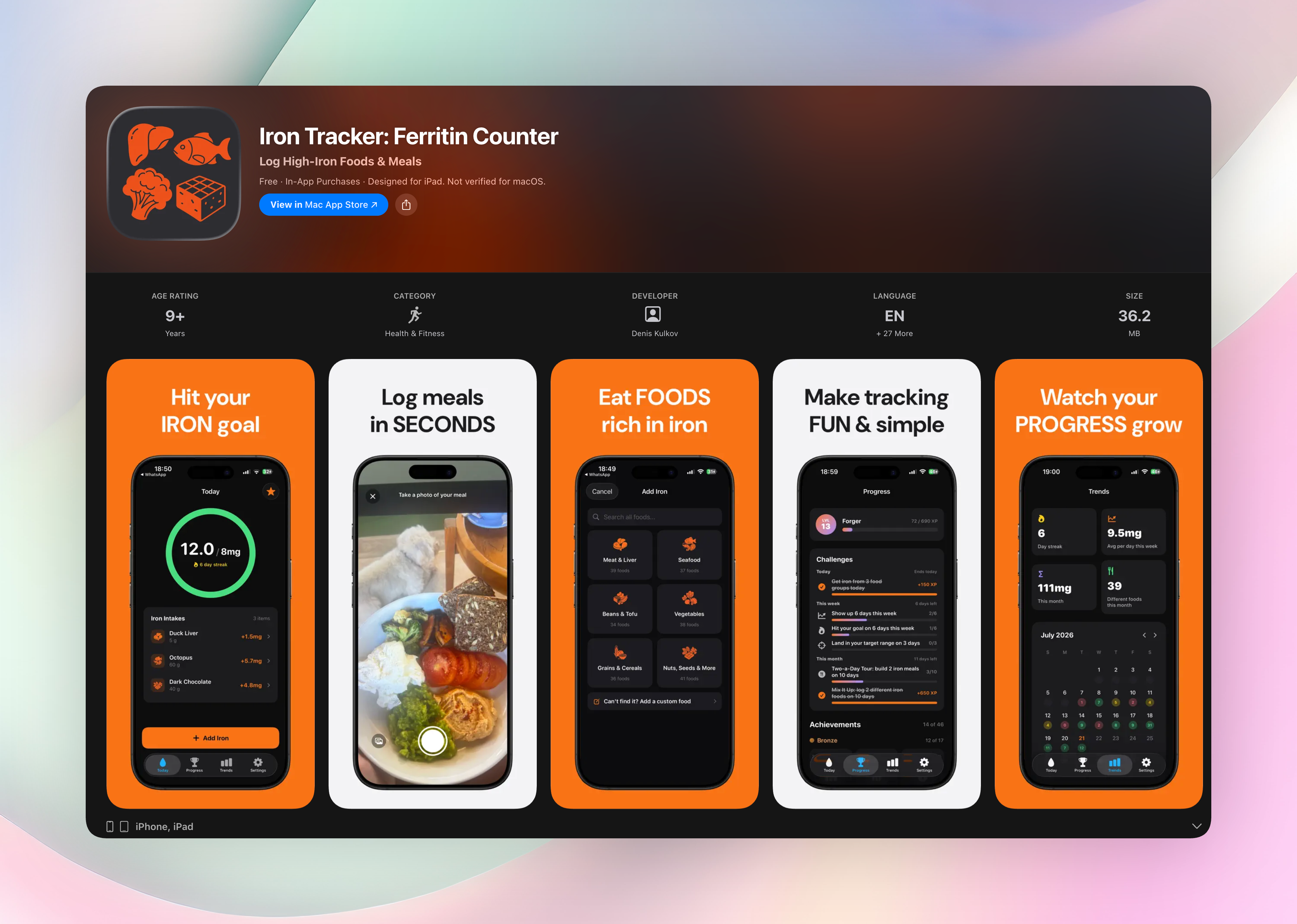
Iron Tracker is the top pick because it strips away the clutter. Instead of burying iron inside a general nutrition dashboard, it puts your ferritin recovery front and centre. You set a target based on gender, age, and pregnancy status (drawn from NIH guidelines), then simply log foods from a curated list of 225 high-iron sources. It shows heme versus non-heme iron, so you know what your body absorbs best.
- One-tap logging with AI options: snap a meal photo, scan a barcode, or speak your entry. You review every result before saving.
- Clean progress ring that updates your daily intake at a glance, plus a weekly streak calendar that makes consistency feel rewarding.
- Built-in reminders that nudge you like a friend, not a blaring alarm.
- Challenges and achievements (46 in total) push you to vary iron sources daily, weekly, and monthly — helpful for non-heme diets.
- Everything runs on your device. No accounts, no data collection, no ads.
Compared to multivitamin trackers that drown iron under dozens of metrics, Iron Tracker keeps the mission clear: hit your target and watch that ferritin climb. It’s iOS-only, and you can get it right now.
Get Iron Tracker or Iron Tracker on the App Store
Perfect for anyone told to raise ferritin — whether you’re managing anemia, following a plant-based diet, or preparing for pregnancy — who wants a dedicated tool that doesn’t get in the way.
2. Feratrack
Best for: Android users who want an all-day iron manager that blends food tracking, symptom logging, and supplement prompts.
Feratrack centers on connecting what you eat and how you feel. Snap a meal photo and its AI estimates iron content, handy for rough tracking, though numbers are approximate, not lab-grade. The supplement reminders help you stay on schedule, while the symptom log lets you tie fatigue or dizziness back to specific meals or missed doses. That feedback loop can make meal choices more obvious over time. If you live on Android and need a visual food diary with context, it’s a solid daily companion.
3. Ruby Health
Best for: A quick, camera-based iron estimate that checks your nailbed colour when you’re curious between blood draws.
Ruby Health uses a patented fingernail selfie to calculate an Iron Score and Circulation Score in seconds. Think of it as a rough trend indicator, not a replacement for a lab test. The app also layers in cycle tracking and hydration logging, which gives you a lightweight wellness dashboard. It’s iOS-only and works best for people who want a snapshot before a doctor’s visit or while troubleshooting low-energy weeks. Just don’t treat the score as a clinical result.
4. My Iron Health
Best for: People managing anemia who want a medical-style companion that tracks symptoms, vitals, and treatment routines.
Built with expert input, My Iron Health goes beyond food tracking. It logs symptoms, sets medication reminders, and monitors health metrics like SpO₂, ECG, and sleep, all in one place. The interface feels more like a health log than a casual app. It’s Android-only, so it fills a gap for users who need a reliable way to show their doctor exactly how they’ve responded to treatment. If you’re on an ongoing iron protocol and value data over simplicity, it’s a strong pick.
5. MyIron+
Best for: Individuals with genetic haemochromatosis who need to track blood removals and lab results, not just iron intake.
MyIron+ shifts focus entirely to managing iron overload. It records venesection dates, volumes, and target ferritin levels, and stores blood test results so you can watch trends over time. An appointment manager keeps the schedule straight. The app is laser-focused on haemochromatosis care, so it won’t suit someone trying to raise ferritin. It’s iOS only, and for the right person, someone navigating regular phlebotomy, it turns a scattered paper trail into a clear treatment journal.
6. My Iron Manager
Best for: Australians managing haemochromatosis who want a local directory of blood collection centres alongside their treatment records.
My Iron Manager removes the guesswork of finding a clinic. Its built-in directory lists Australian collection centres, which makes booking a venesection far less of a chore. You can log venesection history, lab results, and upcoming appointments, essentially building a portable treatment journal. The app’s utility drops significantly outside Australia, but for locals on Android it’s a practical, no-fuss tool that understands the local healthcare landscape.
7. Nutria: AI Nutrition Tracker
Best for: Diet tweakers who want to log meals by photo or barcode and see iron alongside vitamin D, zinc, and other micros.
Nutria’s AI breaks down meals beyond macros, highlighting micronutrient gaps that generic trackers miss. That makes it useful for spotting patterns, like consistently low iron on high-exercise days. It’s iOS-only and works best as a nutritional exploration tool, not a strict medical tracker. If you’re already dialing in your iron but want the wider picture of what’s on your plate, Nutria can surface dietary blind spots without hovering over a food database all day.
How we picked these apps
We installed every app, ran through the core tasks they claim to solve, and cross-checked what they offer against real-life iron tracking needs. Apps that buried iron data inside a generic multivitamin counter or pushed unverified supplement ads got the boot. We prioritized tools that track iron or ferritin directly, whether for deficiency or overload, because iron management isn’t a one-size-fits-all problem. The final mix includes iOS and Android picks so you’re not locked into a single ecosystem. Each one does something distinct: daily goal reinforcement, symptom journals, meal estimates, or venesection logs. By testing them side by side, we sorted the genuinely helpful from the paperweights.
Frequently asked questions
Can an app really tell my iron levels from a photo?
No camera app can replace a blood test. Fingernail-selfie scores and meal-photo estimates offer rough trends, not clinical readings. Use them to spot patterns between lab draws, but always confirm with your doctor.
Do I need a separate app for haemochromatosis?
Standard iron trackers are built for increasing intake. If you’re managing iron overload, you need tools that log blood removal and track lab values over time. Apps like MyIron+ and My Iron Manager are purpose-built for that job.
What’s the simplest iron tracker if I just need reminders?
Iron Tracker is the pick for a clean daily iron goal and friendly reminders. Feratrack and My Iron Health also handle reminders but layer on symptom tracking and vital signs, so they’re better if you want extra detail alongside the nudge.
Are these apps a replacement for blood tests?
Absolutely not. No app replaces a lab draw. Think of them as companions that keep you consistent between doctor visits, making it easier to recall what you ate, how you felt, and whether you took your supplement on time.
The verdict
Iron Tracker is the app we’d send to a friend who just got told to raise ferritin. A clear daily goal, fast logging, and no extra metrics to wade through. It’s the fastest path from “I should track iron” to actually doing it. The right pick ultimately depends on whether you’re turning your attention to intake, symptoms, or overload management. If you want a focused starting point that respects your time, Get Iron Tracker and see if the simplicity sticks. It’s the easiest way to make iron tracking a habit, not a chore.