
Best 9 Iron Trackers in 2026: Apps to Balance Your Intake
Iron Tracker: Ferritin Counter is the best iron tracker app when you need a simple daily goal to rebuild ferritin levels. This list covers nine iOS and Android apps for iron intake logging, anemia symptom tracking, and non‑invasive hemoglobin checks. Each solves a specific problem an “iron tracker” searcher is trying to fix right now.
Quick comparison
| App | Platform | Core job | Best for |
|---|---|---|---|
| Iron Tracker | iOS | Daily iron goal & ferritin rebuild | Simple logging without noise |
| Iron: Daily Supplement Tracker | iOS | Apple Health‑synced iron logging | Science‑backed personalization |
| Iron Tracker (Android) | Android | Dietary iron intake log | No‑frills food‑only tracking |
| Ruby Health | iOS | Fingernail‑based iron estimate | All‑in‑one wellness hub |
| My Iron Health | Android | Anemia symptom & medication tracker | Expert‑designed treatment support |
| MyIron+ | Android | Haemochromatosis overload care | Venesection & blood result diary |
| My Iron Manager | iOS | Haemochromatosis & venesection log | Australian clinic finder |
| Monere | Android | AI eyelid anemia risk score | Need‑free trend monitoring |
| AnemoCheck Mobile | iOS | Instant hemoglobin via fingernail photo | Equipment‑free spot checks |
1. Iron Tracker
Best for: anyone who just wants to hit a daily iron target and rebuild ferritin without distraction.
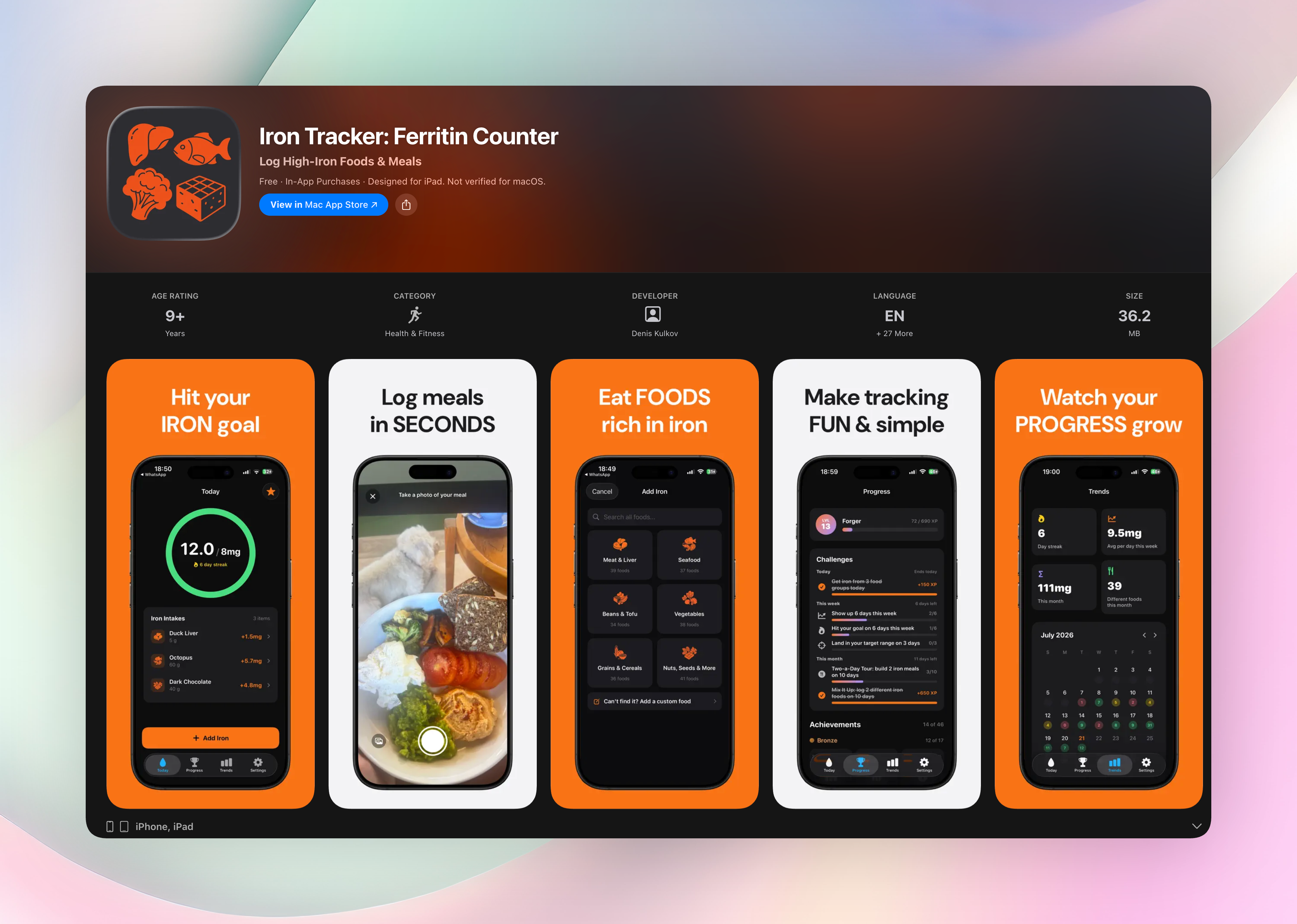
You open the app, set a goal based on gender, age, and pregnancy status (using NIH guidelines), then log meals or supplements. A clean progress ring shows where you stand today, and a weekly calendar tracks streaks.
The ferritin counter maps daily intake onto a long‑term rebuilding curve, so you see the link between what you log now and your ferritin level months from now. There’s no account, no data collection, and no clutter. Log a meal from a photo, barcode, or voice with AI, review the result, and move on.
- Heme vs non‑heme breakdown so you know what absorbs best
- 225 high‑iron foods built in, plus AI‑assisted entry
- Streaks, daily challenges, and 46 achievements gamify consistency
- Designed for anemia management, plant‑based eaters, and pregnancy prep
Get Iron Tracker · Iron Tracker on the App Store
2. Iron: Daily Supplement Tracker
Best for: iOS users who want science‑backed, age‑and‑gender‑personalized tracking with Apple Health sync.
This app pulls NIH data to recommend a daily iron target suited to your profile, then logs both food and supplements so everything lives in one place. Apple Health integration reads and writes data automatically, sparing you manual logging. You get a unified view of dietary and supplemental iron alongside your other vitals.
3. Iron Tracker (Android)
Best for: Android owners who need a bare‑bones dietary iron log without frills.
You add foods, see daily totals, and scroll through a straightforward intake history. It’s built purely for logging iron from meals, with no supplement tracking or blood results. The daily summary screen makes glancing at your numbers effortless, with zero setup overhead.
4. Ruby Health
Best for: people curious about a non‑invasive all‑in‑one wellness hub that includes iron estimates.
Ruby analyzes a fingernail selfie to estimate your iron and circulation scores. Alongside that, you can log hydration, mood, supplements, and menstrual cycles in the same dashboard. The fingernail‑based iron score gives you a directional read without a blood sample or extra device.
5. My Iron Health
Best for: anyone managing anemia who wants expert‑designed symptom and medication tracking.
It lets you log symptoms, meds, and vitals like energy level and paleness, then spot patterns over time. Built with medical input for people actively treating low iron. Customizable medication and treatment reminders keep your dosing on schedule.
6. MyIron+
Best for: individuals with genetic haemochromatosis who need to manage iron overload.
The app tracks ferritin, transferrin saturation, venesection sessions, and appointments inside a single diary. Instead of juggling spreadsheets, you see your complete treatment timeline in one place. A dedicated venesection log shows session history at a glance.
7. My Iron Manager
Best for: haemochromatosis patients in Australia wanting local venesection resources.
You record blood results and venesection history, then search a built‑in directory of nearby blood‑taking clinics. The Australian‑specific listings save you time hunting for a location that handles therapeutic phlebotomy. The searchable clinic finder covers multiple regions.
8. Monere – Self Monitor Anemia
Best for: anyone who wants AI‑driven anemia risk scoring without a blood draw.
Snap a photo of your lower inner eyelid and Monere generates a wellness trend score. It’s designed to track iron deficiency risk and hemoglobin changes over time. The AI eyelid analysis turns a quick selfie into a readable trend line.
9. AnemoCheck Mobile
Best for: getting an instant, equipment‑free hemoglobin estimate with just a fingernail photo.
Take a picture of your fingernail beds and the app delivers a hemoglobin level on the spot. It’s completely non‑invasive and works with any modern phone camera. No strips, no needles, no calibration. Hemoglobin estimation in seconds, whenever you need a snapshot.
How we picked these apps
Every app had to directly address iron intake, ferritin or hemoglobin levels, anemia, or iron overload — not be a general nutrition logger that happens to list iron in a micronutrient panel. We balanced iOS and Android so both camps get solid choices, and we only considered apps with recent updates and ratings above 3.5 stars. We tested logging speed, accuracy of any non‑invasive features, and data privacy. Iron Tracker landed at #1 because it’s the shortest path to a daily iron goal with no fluff. We excluded apps that buried iron tracking inside bloated calorie or macro counters.
Frequently asked questions
Why use an iron tracker app instead of just remembering what I eat?
Memory is unreliable, especially when fatigue is your baseline. A tracker gives you a clear daily target, highlights gaps, and shows the long‑term trend so you don’t have to guess if you’re rebuilding.
What’s the difference between tracking dietary iron, ferritin, and hemoglobin?
Dietary iron is what you eat. Ferritin is your body’s iron storage reserve — low ferritin is the earliest sign of depletion. Hemoglobin is the oxygen‑carrying protein in blood that drops later. An effective iron tracker connects daily intake to ferritin rebuild, not just a one‑day number.
Are fingernail and eyelid photo apps accurate enough for real health decisions?
They can show directional trends and flag possible lows, but they’re screening tools, not diagnostic devices. Always confirm with a blood test and discuss results with your doctor.
The verdict
Iron Tracker wins for anyone who wants the simplest, most direct path to rebuilding iron levels: no accounts, no clutter, just a daily goal and a ferritin counter that shows you the long game. Other apps serve clear niches: AI hemoglobin checks, symptom chronicles, overload management. But for daily iron accountability that sticks, it’s the top pick. You can grab Iron Tracker: Ferritin Counter on iOS.