
Best 8 Iron Health Trackers in 2026: Apps to Balance Your Iron Intake
Iron Tracker is the best My Iron Health alternative for rebuilding ferritin levels with minimal effort. This list covers 8 mobile apps that track iron intake, symptoms, and blood biomarkers, so you can find the right fit for your platform and goal.
Quick comparison table
| App | Platform | Best For | Standout Feature |
|---|---|---|---|
| Iron Tracker: Ferritin Counter (Top Pick) | iOS | Building a daily iron-logging habit | Ferritin progress calculator that shows weekly trends |
| My Iron Health | iOS | Symptom + vitals tracking | Correlating subjective feels with SpO2 and heart rate |
| Ruby Health | Android | Non‑invasive iron screening | Fingernail selfie for an Iron and Circulation Score |
| Iron: Daily Supplement Tracker | iOS | Science‑backed intake targets | Two‑way sync with Apple Health |
| SmarTest Ferritin | iOS | At‑home ferritin testing | Reads a capillary blood test strip without a lab |
| ANEMIA easy check | Android | Preoperative anemia screening | Clinical algorithm that flags iron deficiency before surgery |
| CareClinic App | Android | Anemia symptom pattern tracking | Cross‑referencing fatigue, heart rate, and breathlessness |
| InsideTracker | iOS | Biomarker‑driven nutrition | Food suggestions tied directly to your blood work |
Jump to the breakdown that matches your needs, only Iron Tracker gets a direct download link.
1. Iron Tracker: Ferritin Counter
Best for: Turning a daily iron goal into a simple, consistent habit.
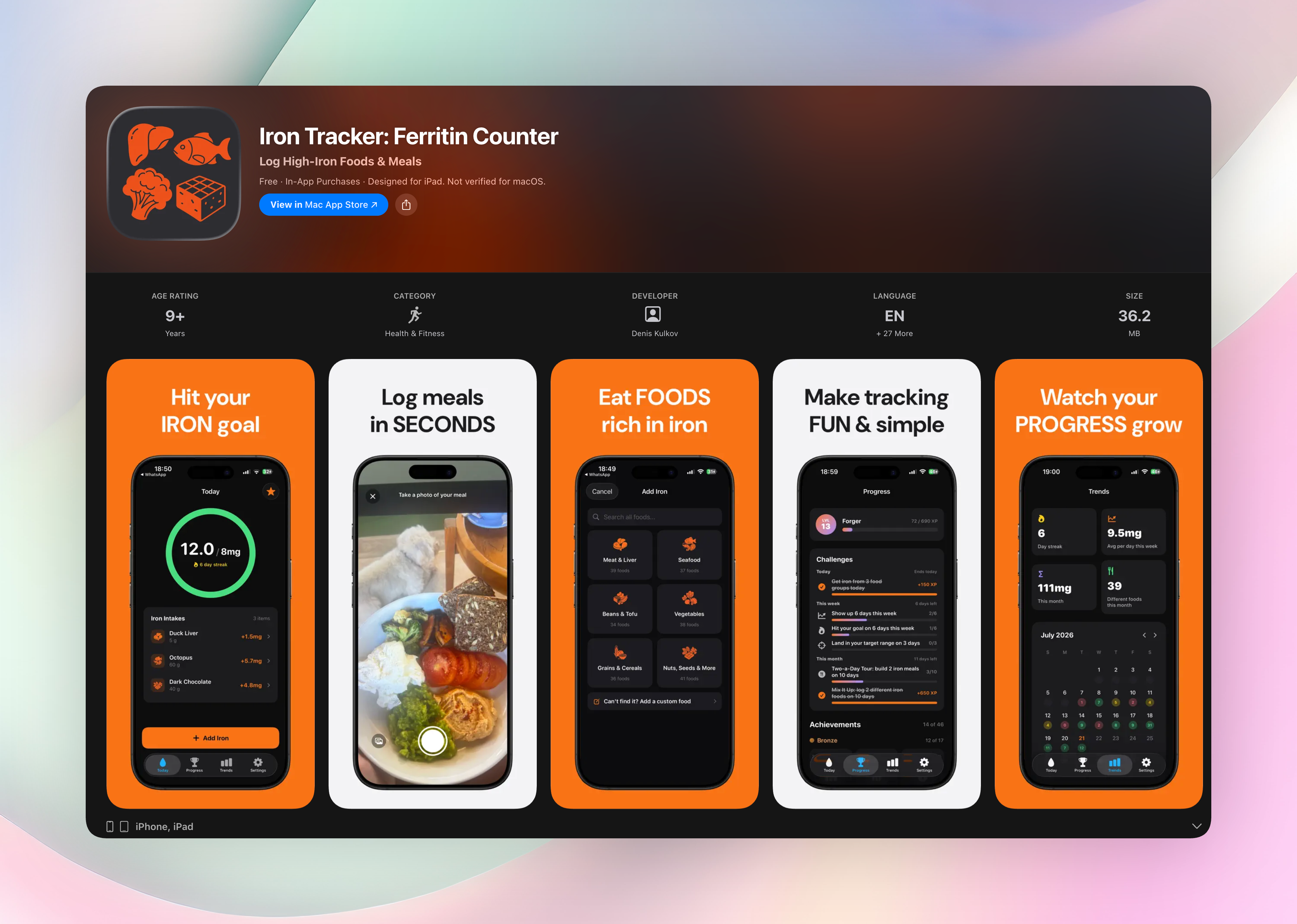
Iron Tracker strips away everything that gets in the way of rebuilding your ferritin. It’s a pure iron counter. No bloated health dashboards, no login walls. You set a science‑backed target based on your gender, age, and pregnancy status, then log meals from a library of 225 high‑iron foods. Each entry shows heme vs non‑heme iron so you know what your body absorbs best.
Logging is fast: snap a photo, scan a barcode, or describe a meal with your voice and review the AI‑generated result before saving. A progress ring fills as you eat, and the weekly calendar keeps your streak visible. Gamified touches like XP, 46 achievements, and daily and monthly challenges make the habit stick without turning it into a chore.
The real payoff is the built‑in ferritin progress calculator. It plots your trends week over week, turning daily discipline into a clear picture of whether your levels are climbing. Everything stays on your device. No account, no data collection, no ads.
Get Iron Tracker · Iron Tracker on the App Store
2. My Iron Health
Best for: Combining symptom tracking with vitals like SpO2.
My Iron Health is built specifically for managing anemia day‑to‑day. It pairs medication reminders with a daily log where you rate emotional and physical shifts. Over time, the app helps you spot connections: how a low‑energy afternoon lines up with SpO2 readings or skipped iron pills. It’s less about food logging and more about connecting the dots between how you feel and what your body measures. The integrated health tracker makes those subjective‑to‑objective correlations a core feature.
3. Ruby Health
Best for: A non‑invasive iron estimate using a fingernail selfie.
Ruby Health takes an unusual approach: snap a photo of your fingernails and the app analyzes color and features to generate an Iron and Circulation Score. It’s not a replacement for a blood test, but it gives you a quick, lab‑free checkpoint between doctor visits. Beyond the nail screen, you can log water intake, menstrual cycles, and daily supplements to build a broader wellness routine. The fingernail‑based screening is the standout, genuinely different from any other iron app.
4. Iron: Daily Supplement Tracker
Best for: Seamless Apple Health integration and science‑based personalization.
This ad‑free tracker adjusts your daily iron goal using age and gender data, then quietly syncs everything to Apple Health. Log a meal and your intake updates your health record automatically. The two‑way sync means you won’t double‑log in another app. iCloud backups keep your history safe, and the privacy‑forward design skips accounts and third‑party sharing. It’s a solid choice if you live in the Apple ecosystem and want your iron data woven into your overall health profile.
5. SmarTest Ferritin
Best for: Pairing with the Preventis rapid home test for lab‑free ferritin checks.
SmarTest Ferritin reads an immunological strip test from a finger‑prick capillary blood sample and delivers a quantitative ferritin result, with no lab visit required. It’s useful for monitoring both iron deficiency and overload, always under professional guidance. If you’re already using Preventis test kits, the app turns your phone into the reader. For everyone else, the hardware requirement means it’s not a standalone tool.
6. ANEMIA easy check
Best for: Preoperative anemia screening using a clinical algorithm.
Developed by Hirslanden Kliniken Zürich, this Android app walks doctors through a validated treatment algorithm to flag iron deficiency before elective surgery. It’s a clinician’s sidekick, not a patient self‑management tool. By integrating a proven clinical pathway, it reduces surgical risk from undetected anemia. If you’re a healthcare professional preparing patients for procedures, it’s a focused, no‑nonsense aid.
7. CareClinic App
Best for: Logging fatigue, rapid heart rate, and shortness of breath in aplastic anemia.
CareClinic acts as a comprehensive health diary. You log symptoms like brain fog, rapid pulse, and breathlessness daily; the pattern‑finding engine cross‑references them with medications and activities. Over weeks, it can reveal subtle triggers, like a jump in heart rate that always follows a missed supplement. It’s not iron‑specific, but its strength lies in connecting multiple anemia markers into one view.
8. InsideTracker
Best for: Tracking blood biomarkers like ferritin, iron, and hemoglobin with tailored food plans.
InsideTracker pulls your latest lab results and translates ferritin, iron, hemoglobin, and dozens of other markers into evidence‑based diet and lifestyle recommendations. A science team stands behind the suggestions, but this is a broad health‑optimization platform, not a focused iron tracker. It shines when you want food advice directly linked to your blood work, though the full feature set comes with a paid plan.
How we picked these apps
We looked for apps that track iron or ferritin meaningfully, not just a checkbox in a multivitamin logger. Platform availability, clear data presentation, and an absence of marketing fluff mattered. We prioritized tools that either focus on iron or handle relevant biomarkers and symptoms without feature bloat. Apps that only offer generic vitamin logging or demand expensive hardware with no clear benefit didn’t make the cut.
Frequently asked questions
Can an app really help raise my ferritin?
Yes, by building a consistent logging habit and surfacing patterns you’d otherwise miss. It’s a companion, not a medical treatment.
Do I need a home test kit to use these apps?
Only SmarTest Ferritin requires a specific kit. The rest work with manual food logs or existing lab results.
Are these apps private?
Most store data locally or in iCloud/Google Fit. Iron Tracker requires no account at all, so everything stays on your phone.
Which app has the simplest daily tracking?
Iron Tracker, by design. It’s a single‑purpose counter with no extra screens.
The verdict
Iron Tracker: Ferritin Counter is the top pick for anyone who just wants to hit a daily iron goal without distractions. Its ferritin progress calculator translates consistent logging into a clear trend, and the no‑login design keeps things light and private. If you’re looking for one app to trust with your daily iron habit, start here.
Get Iron Tracker (iOS only)
Free Iron tools
- Daily Iron RDA CalculatorEnter your age, sex, life stage and diet to see the published iron RDA, upper limit and vegetarian or vegan adjustment.
- Ferritin Change CalculatorCompare two ferritin test results with their dates and units to calculate the absolute change, percentage change and rate over time.
- Ferritin Unit ConverterEnter the ferritin value from your blood test and the unit your laboratory printed. The converter shows the same number in ng/mL, µg/L and pmol/L at once, with the standard adult reference ranges alongside it for comparison.
- Heme vs Non-Heme Iron ComparisonCompare heme vs non heme iron by entering the two amounts. See total iron and a clear percentage split for each form.
- Hemoglobin Unit ConverterHemoglobin lab test units are not the same everywhere. Enter the number on your report, pick the unit it is printed in, and convert hemoglobin g/dL to mmol/L or g/L — with the same value shown in all three units and the standard adult reference ranges beside it.
- Iron and Ferritin Level ChartPlot an iron or ferritin result against commonly used reference ranges. Choose the test, enter its value, and see whether it falls in the low, typical or high band.
- Iron-Rich Foods ChartCompare iron-rich foods by category, serving size and diet preference. See iron per serving, heme or non-heme type, and percent Daily Value.
- Iron-Rich Foods for Anemia ChartFilter a static food table by diet, serving size and iron type to compare iron per serving with preparation notes. This is a food reference, not a diagnosis.
- Iron Supplement Supply CalculatorEstimate how long a bottle lasts, its daily and 30-day cost, elemental iron per day and the date it runs out.
- MCH CalculatorEnter the hemoglobin value and red blood cell count from your blood test report. Get mean corpuscular hemoglobin (MCH) in picograms, plus where that number sits against the standard adult reference range of 27–33 pg. Nothing here is a diagnosis — lab results are interpreted by a clinician.
- Transferrin Saturation CalculatorEnter the serum iron and TIBC printed on your blood test and pick the unit they were reported in. Get transferrin saturation as a percentage, both values echoed in the other unit, and where the percentage falls against the published adult reference range.
- Vegetarian Iron Foods ChartCompare vegetarian iron sources by serving size, rank them by iron per portion, and see their contribution to your selected daily target.